Fulfillment speed in packaging is usually constrained less by equipment capability than by the reliability of incoming consumables. A band that drifts in elasticity or a bag that varies in fit forces operators to slow the pack-out rhythm, recheck closures, and protect shipment integrity. An aligned rubber band supplier keeps that constraint from becoming a planning concern.
High-volume distributors tend to perform best when poly bags and bands are sourced as managed supply categories rather than spot purchases. The practical benchmark is steady availability with consistent material behavior, because purchasing teams gain more value from predictable replenishment than from chasing short-term price wins.
The strategic choice is not only item cost. It is the balance between working capital, order responsiveness, and material consistency across pack stations. A strong supplier relationship gives procurement and operations a shared foundation for faster promise dates and cleaner fulfillment execution.
Challenges for a Rubber Band Supplier in Wholesale Markets
Wholesale markets reward buying scale, but scale only creates value when incoming lots behave predictably at the packing table. Rubber compounds that feel acceptable during receiving can still create uneven hold or recovery once they move through busy handling routines. The directional signal procurement teams watch is variation: consistent lots support smoother line balance, while erratic material introduces more checks before release.
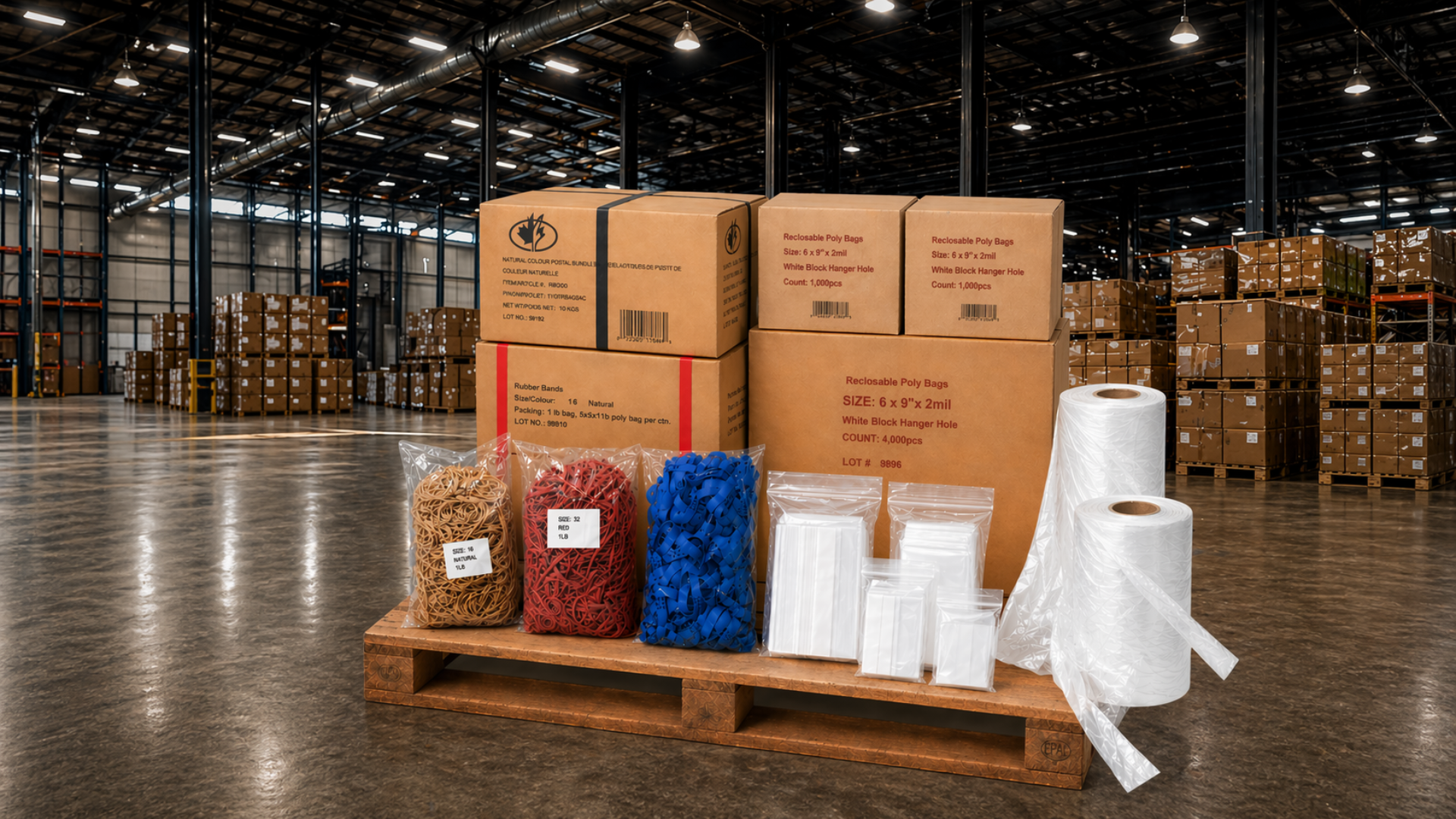
Quality control should cover elasticity, cut consistency, cleanliness, and storage sensitivity. For poly bags, the parallel concern is fit stability and film integrity, which is why finding a Poly bag supplier with reliable inventory depth belongs in the same sourcing decision. For a deeper breakdown of material alignment, see our guide on matching film selection to closure method.
The tradeoff is simple but consequential. Pure price buying can look efficient at purchase order creation, yet total cost tends to move through rework, replacement, and customer communication. Disciplined distributor availability keeps procurement decisions connected to fulfillment performance.
People Also Ask
What are poly bags used for?
Poly bags are used for packaging, protecting, and storing products in retail and industrial settings, and they’re commonly chosen and flexible protection. They’re widely used across many industries for both food and non-food applications.
What Should Companies Look for in a Rubber Band Supplier?
Companies should evaluate product consistency, inventory availability, material quality, and supplier responsiveness to support reliable packaging workflows.
Selecting a Rubber Band Supplier for Industrial Needs
Selection should begin with use conditions, not catalog habits. A Rubber Band Supplier for industrial packaging should help buyers compare tensile strength, elastic recovery, band width, and material compatibility against the load profile and storage environment. The qualitative benchmark is repeatable closure force: bands should return consistently after stretch and maintain grip without adding unnecessary operator effort.
Sensitive packaging environments may require virgin food-grade materials, clean handling practices, and documentation that supports internal approval workflows. That does not mean every task needs the same material class; over-specifying can tie up budget, while under-specifying can create avoidable inspection work. The best procurement path defines packaged-item criticality before locking in the band type.
Partnering with KL Rubber can support access to durable products for industrial use when selection is tied to the right specification. Decision-makers should evaluate responsiveness, product range, and replenishment fit rather than treating rubber bands as interchangeable consumables.
Rapid Fulfillment with a Reliable Rubber Band Supplier
Rapid fulfillment depends on supplier behavior before the urgent order appears. Same-day shipping support, where available, gives packaging teams a practical way to maintain leaner inventory while protecting service commitments. The directional signal is responsiveness: distributors that communicate clearly, stage bulk inventory, and confirm availability early reduce friction across purchasing and operations.
Wholesale Rubber Bands need to be accessible in bulk without forcing buyers into guesswork about material fit. Stock depth matters, but the stronger selection criterion is whether the distributor can pair volume availability with consistent product guidance. That combination helps teams keep pack stations supplied, simplify reorder routines, and preserve cash for priority inventory.
KL Rubber offers responsive service centered on durable products, steady communication, and distributor-focused support. Procurement teams ready to refine their consumables program can use a Rubber Band Supplier conversation to align band performance, poly bag availability, and fulfillment timing. The business outcome is a controlled supply chain, with materially lower risk of disruption and a cleaner path from order release to shipment.


