
Selecting the right fasteners helps fresh produce remain secure during transit, reduces damage, and maintains presentation quality at the point of sale. Produce rubber bands made from natural rubber and synthetic materials each bring distinct performance characteristics to agricultural, packing, and distribution environments.
Natural rubber delivers broad elasticity across a wide range of bundle sizes, while synthetic alternatives address specific operational constraints such as latex sensitivity, heat exposure, or chemical contact. KL Rubber provides high-quality solutions tailored for large-scale distribution needs, offering both material types to support informed procurement decisions across fresh produce supply chains.
Performance of Produce Rubber Bands in High Moisture Environments
Natural rubber bands offer strong elasticity for delicate leafy greens, herbs, asparagus, and other fresh produce items. Their stretch profile helps them conform to irregular bundle shapes without applying concentrated pressure that can cause bruising.
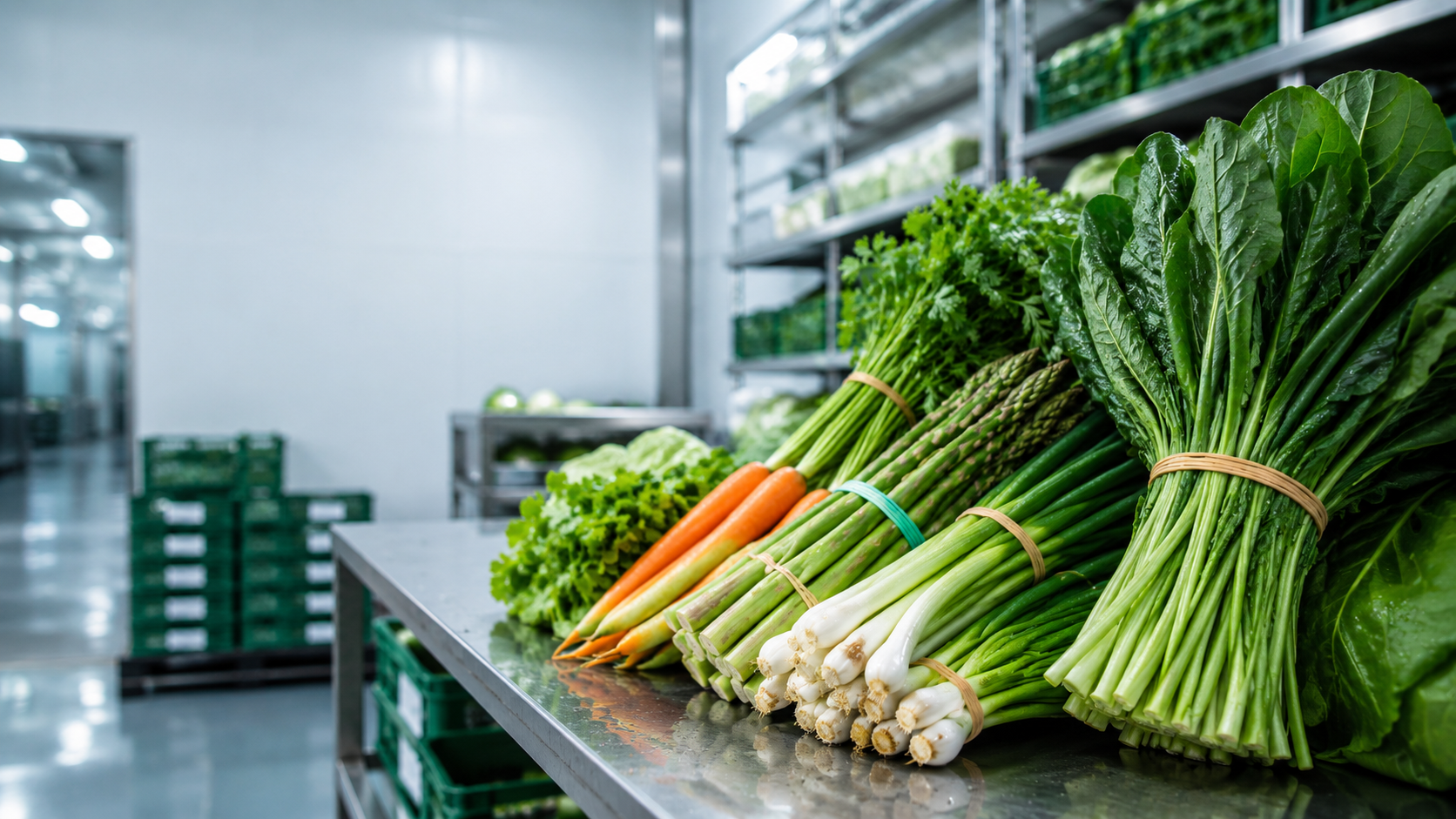
In high-humidity cold storage and wet packing environments, natural rubber produce bands maintain consistent tension across a broader temperature range than many synthetic formulations. This matters for fresh and organic produce operations where bands need to hold securely through storage, handling, transport, and retail display.
Synthetic alternatives provide specialized resistance against extreme temperature swings and chemical exposure, making them a stronger fit for operations that use sanitizing wash solutions or experience significant ambient temperature variation between storage and dispatch.
Natural Rubber vs. Synthetic Produce Rubber Bands at a Glance
For procurement teams evaluating produce bands across multiple operational criteria, the comparison below highlights the most decision-relevant distinctions.
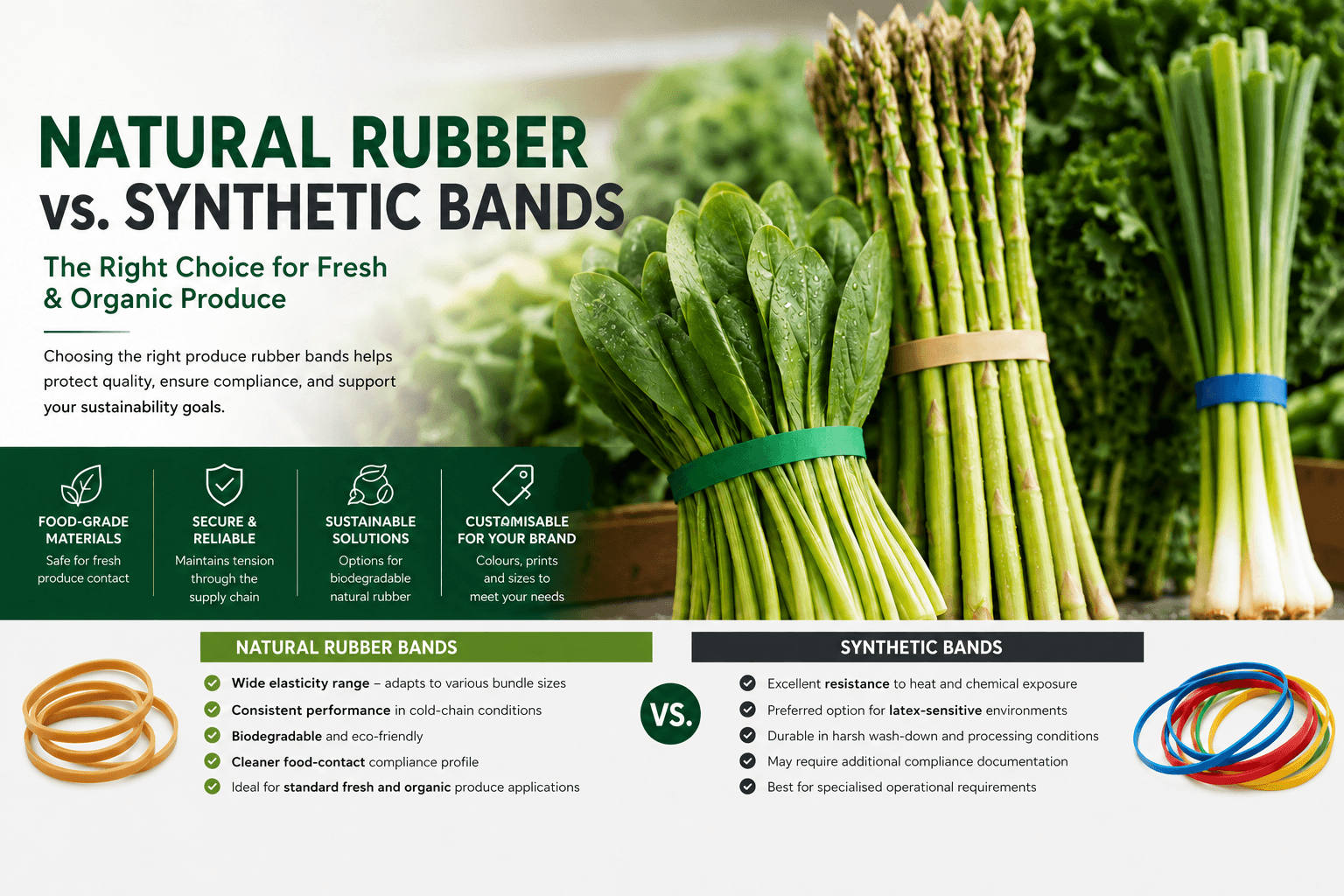
Natural Rubber Bands
- Wide elasticity range for varied bundle sizes.
- Consistent tension in cold-chain conditions.
- Biodegradable and eco-friendly.
- Cleaner food-contact compliance profile.
- Ideal for standard fresh and organic produce applications.
Synthetic Bands
- Stronger resistance to heat and chemical exposure.
- Preferred where latex sensitivity is documented.
- Useful in harsh wash-down or processing conditions.
- May require additional compliance documentation.
- Best for specialized operational requirements.
Key Differences Buyers Should Evaluate
- Elasticity range: Natural rubber conforms to a wider variety of bundle shapes and sizes; synthetic bands offer a narrower, more fixed stretch profile.
- Temperature performance: Natural rubber maintains consistent tension through cold-chain conditions; synthetic options perform more reliably under extreme heat or chemical wash exposure.
- Biodegradability: Natural rubber breaks down without chemical additives; synthetic bands require additional end-of-life disposal consideration.
- Latex sensitivity: Synthetic bands are the preferred choice where packing staff have documented latex sensitivities.
- Chemical resistance: Synthetic formulations tolerate sanitizing agents and processing chemicals more effectively than natural rubber.
- Compliance documentation: Natural rubber carries a cleaner food-contact material profile; synthetic bands may require more detailed supplier declarations.
- Branding and traceability: Both material types are available with custom colors and print options to support retail PLU coding and labeling programs.
Compliance and Safety Standards for Produce Rubber Bands
Food-grade materials are essential for maintaining safety across the entire supply chain. Both natural and synthetic band materials should meet applicable contact-material standards before being used with consumable goods.
Natural rubber is inherently biodegradable without the need for chemical additives, which supports retailer sustainability commitments and reduces end-of-chain disposal concerns. For operations supplying certified organic produce, natural rubber’s cleaner material profile typically presents a lower compliance burden than synthetic options.
Synthetic vegetable rubber bands may incorporate stabilizers or processing aids that require additional documentation to satisfy food-contact compliance requirements in certain markets. KL Rubber ensures all vegetable rubber bands support retail traceability and branding, with options available in custom colors and printed formats that align with retailer labeling programs.
Selecting the Right Produce Rubber Bands for Your Operations
Vegetable rubber bands made from natural rubber are the preferred choice for fresh produce applications where elasticity, biodegradability, and food-contact simplicity are the primary decision criteria.
They perform consistently across the cold-chain conditions most common in fresh and organic produce distribution, and their material profile aligns well with retailer sustainability expectations.
Synthetic bands serve specific niche requirements where latex sensitivities among packing staff are a documented concern, or where chemical resistance in wash-down environments is a non-negotiable operational requirement.
Frequently Asked Questions (FAQ)
Are natural rubber bands better for fresh produce?
When should buyers choose synthetic elastic bands?
Can produce rubber bands be customized?
Need Help Choosing Between Natural and Synthetic Bands?
KL Rubber can recommend the right material based on your produce, packing process, compliance needs, order volume, and distribution environment.
Contact KL Rubber